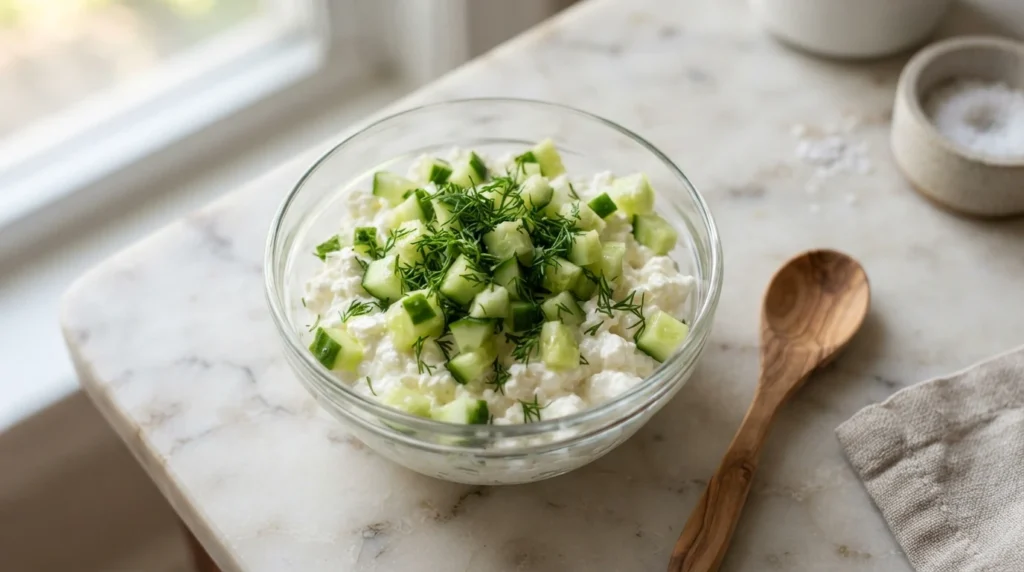

Transform your morning routine with this Keto Cottage Cheese Breakfast Bowl with Cucumber and Dill. This dish offers a satisfying, protein-rich start to the day without the heaviness of traditional breakfast items, making it an ideal choice for those following a low-carbohydrate lifestyle.
Why This Dish Works
Cottage cheese is often overlooked in keto circles due to concerns about lactose or water content. However, when prepared correctly, it serves as an excellent vehicle for healthy fats and fresh flavors. The combination of creamy cottage cheese with the crunch of cucumber and the aromatic punch of dill creates a texture and flavor profile that rivals more complex dishes, yet requires minimal effort to prepare.
Recipe Overview
- Servings: 1 large bowl (approx. 400g total weight)
- Preparation Time: 10 minutes
- Cooling/Chilling: Optional, 5 minutes for texture development
- Total Time: 10 minutes
Ingredients
This recipe relies on fresh ingredients to maintain its crisp texture and vibrant flavor. The quantities below are measured in grams to ensure consistency.
- Fresh Cottage Cheese: 300g (full fat, not low-fat)
- Cucumber: 150g (peeled and diced into small cubes)
- Dill: 15g (fresh, roughly chopped)
- Chives: 10g (optional, finely minced)
- Garlic: 5g (minced fresh bulb garlic)
- Lemon Juice: 20ml (freshly squeezed from one small lemon)
- Olive Oil: 15ml (extra virgin)
- Salt: 3g (fine sea salt or kosher salt)
- Black Pepper: 2g (freshly ground)
Preparation Method
Follow these steps to assemble your bowl with precision. The key to success here is balancing the moisture from the cottage cheese and cucumber with the acidity of the lemon.
- Prep the Cottage Cheese: Place the 300g of cottage cheese in a medium mixing bowl. If you prefer a creamier texture, you may drain it for 5 minutes before use, but this is optional as cottage cheese retains moisture well.
- Dice the Cucumber: Peel the cucumber and dice it into small cubes (approx. 0.5cm). Ensure the pieces are uniform to prevent uneven cooking or texture issues during mixing.
- Create the Dressing: In a small bowl, combine the minced garlic (5g), olive oil (15ml), lemon juice (20ml), salt (3g), and black pepper (2g). Whisk vigorously until emulsified. The acidity from the lemon is crucial here to cut through the richness of the cheese.
- Combine Ingredients: Gently fold the diced cucumber into the cottage cheese. Be careful not to overmix, as this can release too much water from the cucumber and make the bowl watery.
- Add Herbs: Stir in the fresh dill (15g) and optional chives (10g). Taste the mixture; if it lacks acidity, add a splash more lemon juice. If it is too salty, add a pinch of sugar-free salt substitute.
- Serve Immediately: This bowl is best served cold or at room temperature. The cucumber will soften slightly over time, losing its crunch.
Troubleshooting Common Issues
When making this dish, several common problems can arise. Understanding the causes allows you to adjust your technique for better results.
Watery Filling
Cause: Cottage cheese naturally contains whey, and cucumber releases water when diced. If these combine without drainage, the bowl becomes a soup.
Fix: Before mixing, place the cottage cheese in a fine-mesh sieve over a bowl for 10 minutes to drain excess liquid. Alternatively, mix the dressing just before serving to minimize direct contact with moisture-rich ingredients.
Lack of Crunch
Cause: Cucumber cubes left too long in the bowl release their internal water, becoming soggy.
Fix: Dice the cucumber immediately before plating. For a longer shelf life, toss the diced cucumber with a little salt and let it sit for 10 minutes, then rinse and pat dry before adding to the bowl.
Bland Flavor
Cause: Insufficient acid or lack of fresh herbs can make the dish taste flat.
Fix: Always taste before serving. Increase the lemon juice by 5ml increments until the desired brightness is achieved. Fresh dill provides a sharpness that dried herbs cannot replicate, so ensure your herbs are very fresh.
Genuine Substitutions
If you have dietary restrictions or pantry limitations, consider these swaps, noting their impact on texture and carbs.
- Cottage Cheese Substitute: Greek yogurt (full fat) can replace cottage cheese in a 1:1 ratio by weight. It offers similar tang but a smoother texture. Note: Greek yogurt contains slightly more lactose, though it remains low-carb.
- Fresh Cucumber Substitute: Zucchini is a popular keto alternative. However, zucchini releases significantly more water than cucumber. If substituting, drain the zucchini slices thoroughly before using.
- Dill Substitute: Parsley or chives can mimic the green flavor profile, but they lack dill’s distinct anise-like aroma. Use a slightly higher quantity of parsley to compensate.
Storage and Reheating
This dish is designed to be eaten fresh, but you may store it for short-term consumption.
- Refrigeration: Store in an airtight container for up to 12 hours. Beyond this, the texture degrades rapidly due to moisture migration.
- Freezing: Not recommended. The high water content from the cucumber and cottage cheese will cause separation and graininess upon thawing.
- Reheating: Briefly microwave for 45 seconds if needed to warm through, but avoid heating beyond this point to prevent sogginess.
Frequently Asked Questions
Is this recipe truly low-carb?
The primary carbohydrate sources are the cucumber and cottage cheese. A single serving (approx. 200g) contains roughly 4–6 grams of net carbs, depending on the specific brand of cottage cheese and cucumber size. This fits comfortably within most standard ketogenic macros.
Can I use low-fat cottage cheese?
While technically possible, low-fat cottage cheese often has a different texture and higher water content due to processing. Full-fat varieties generally provide better creaminess and satiety for breakfast bowls.
How do I make this meal more filling?
Add a source of healthy fat or protein, such as avocado slices, walnuts, hemp seeds, or a poached egg on top. These additions increase satiety without significantly impacting the carbohydrate count.