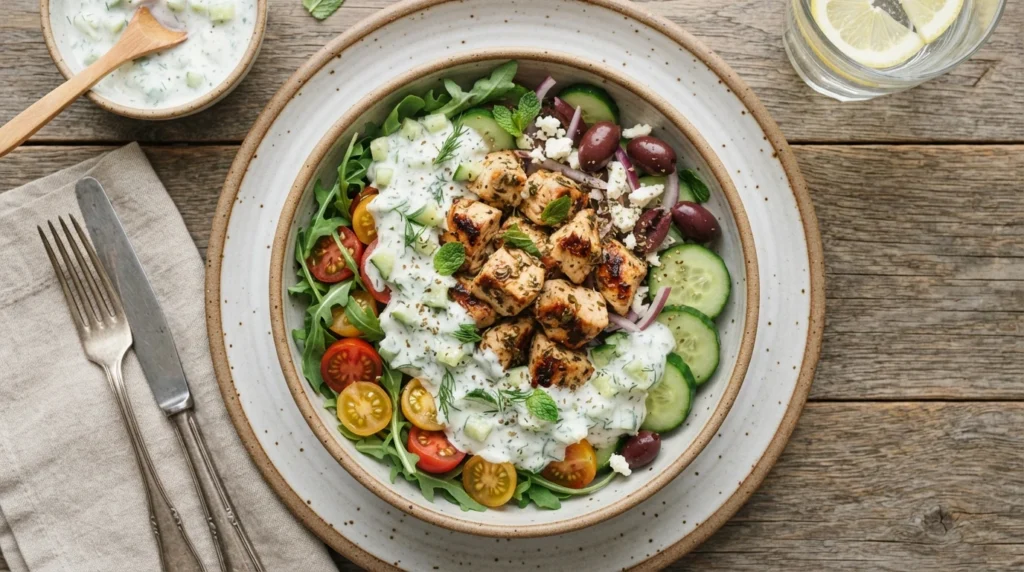

Looking for a refreshing, protein-packed meal that feels like a classic Greek restaurant but fits a lower-carbohydrate eating pattern? This Keto Greek Chicken Bowl delivers the bright flavors of Mediterranean cuisine without the heavy carbs found in traditional rice or pasta sides. The key to success lies in balancing the creamy texture of homemade tzatziki with tender, juicy grilled chicken and crisp, hydrating vegetables.
Why Make This Dish?
This bowl is ideal for home cooks who want a satisfying dinner that avoids the dryness often associated with keto grilled meats. By focusing on ingredients with high water content—such as cucumber and yogurt—the dish naturally creates a cooling, refreshing mouthfeel. It requires minimal active cooking time once the chicken is prepared, making it perfect for weeknight dinners or meal prep.
Recipe Overview
- Servings: 4 people
- Prep time: 15 minutes (including marinating)
- Cook time: 12–15 minutes
- Total time: ~30 minutes
- Dietary focus: Low-carb, high-protein, gluten-free (verify yogurt label)
Ingredients
The recipe relies on fresh, whole ingredients to maintain texture and flavor without added fillers.
- Chicken breast: 800g, boneless and skinless, cut into bite-sized cubes
- Greek yogurt: 400g, full-fat, plain (unsweetened)
- Cucumber: 250g, peeled and finely diced
- Mint leaves: 30g, fresh or high-quality frozen
- Garlic: 1 clove, minced
- Lemon juice: 2 tablespoons (approx. 30ml), freshly squeezed
- Extra virgin olive oil: 1 tablespoon (15ml)
- Sea salt and black pepper: To taste
- Vegetable base: Mixed greens, cherry tomatoes, or roasted zucchini (approx. 300g cooked weight)
Method
Follow these steps to create a cohesive bowl with distinct textures and flavors.
- Prepare the Chicken: In a large bowl, toss the chicken cubes with 1 teaspoon of olive oil, half the minced garlic, salt, and pepper. Let them marinate for at least 10 minutes to absorb the seasoning.
- Cook the Protein: Heat a cast-iron skillet or heavy-bottomed pan over medium-high heat. No oil is needed as the chicken will release its own fats. Cook in batches if necessary to avoid crowding, which lowers the temperature and steams rather than sears the meat. Cook for 6–8 minutes per side until the internal temperature reaches 74°C (165°F). Remove from heat immediately; residual heat will finish cooking it gently.
- Make the Tzatziki: While the chicken cooks, combine the Greek yogurt, diced cucumber, minced garlic, lemon juice, and olive oil in a separate bowl. Fold in the mint leaves gently.
- Cool and Drain: This is the most critical step for texture. Transfer the tzatziki to the refrigerator and let it sit uncovered for at least 30 minutes. The cucumber will continue to release water, which you will drain off before serving. This prevents a watery sauce on your plate.
- Assemble: Place a generous portion of your chosen vegetable base on each plate. Top with the warm chicken and spoon over the chilled tzatziki. Serve immediately while the chicken is still hot and the cucumber-curd mixture is cold.
Troubleshooting Common Issues
Even experienced cooks encounter challenges when making homemade tzatziki or grilling chicken. Here is how to handle them.
Problem: The sauce is too watery.
Cause: Cucumber cells break down quickly, releasing significant amounts of water, especially if the yogurt is not chilled first. Mixing warm ingredients accelerates this breakdown.
Fix: Always chill the tzatziki components before mixing. If the mixture looks thin after 30 minutes in the fridge, cover it and refrigerate for another hour. You can also gently press the liquid out of the diced cucumber with a clean kitchen towel before adding it to the yogurt.
Problem: The chicken is dry or overcooked.
Cause: Overcrowding the pan causes steaming instead of searing, leading to uneven cooking and moisture loss. Using high heat for too long also dries out the protein.
Fix: Cook in small batches so each piece has direct contact with the hot surface. Remove the chicken from the pan as soon as it hits 74°C (165°F). Letting it rest in the pan for 2 minutes before serving allows the juices to redistribute, keeping it moist.
Substitutions and Adaptations
You may adjust ingredients based on availability or dietary preferences, but be mindful of texture changes.
- Yogurt Substitute: Coconut yogurt can mimic the tangy profile without lactose. However, it is naturally higher in saturated fat and lower in protein than Greek yogurt. Ensure it is full-fat to avoid a thin consistency.
- Cucumber Substitute: Zucchini works well but releases less water. If you use zucchini, the tzatziki will be creamier but slightly less refreshing. You may add a splash more lemon juice to brighten the flavor.
- Vegetable Base: Traditional bowls often include rice or potatoes. For keto compliance, swap these for cauliflower rice (steamed and cooled), roasted asparagus, or a large bed of arugula mixed with cherry tomatoes.
Storage and Reheating
This dish is best eaten fresh, but it can be prepared ahead for meal prep.
- Make-Ahead: You can prepare the tzatziki up to 2 days in advance. Store the chicken separately and reheat it gently in a skillet or microwave. The tzatziki should ideally be eaten cold; reheating it will alter the texture.
- Storage: Keep the bowl components separate in airtight containers. Chicken lasts up to 3 days in the refrigerator. Tzatziki is best consumed within 24 hours of preparation, as the cucumber continues to release moisture over time.
- Reheating: To reheat the chicken, use a skillet over low heat with a splash of water or broth to steam it gently, preventing dryness. Avoid high-power microwaving which will toughen the meat fibers. Do not reheat the tzatziki.
Frequently Asked Questions
Can I use this recipe for a strict ketogenic diet?
While this dish is very low in carbohydrates and high in protein, individual ketosis responses vary. The primary carbohydrate source is the vegetable base; if you include large portions of tomatoes or other starches, monitor your total daily carb intake carefully.
Is this recipe suitable for someone with a dairy allergy?
Greek yogurt is the central component of the tzatziki. If you have a dairy allergy, substitute the yogurt with a full-fat coconut yogurt or a commercially available dairy-free alternative that closely mimics its texture and tang.
How do I ensure my chicken is safe to eat?
Always use a food thermometer to check the internal temperature. The USDA recommends cooking poultry to an internal temperature of 74°C (165°F). Relying on color alone is not sufficient, as cooked chicken can appear pink due to additives or undercooking.