
Transforming rich, fatty pork belly into satisfying keto-friendly bites is a favorite among home cooks looking for flavor without the sugar. The main challenge lies in rendering the fat effectively while keeping the lean meat tender, often resulting in dry crumbles if not handled correctly. This guide focuses on a specific technique: searing at high heat to create crisp edges and finishing gently to ensure moisture retention.
Overview
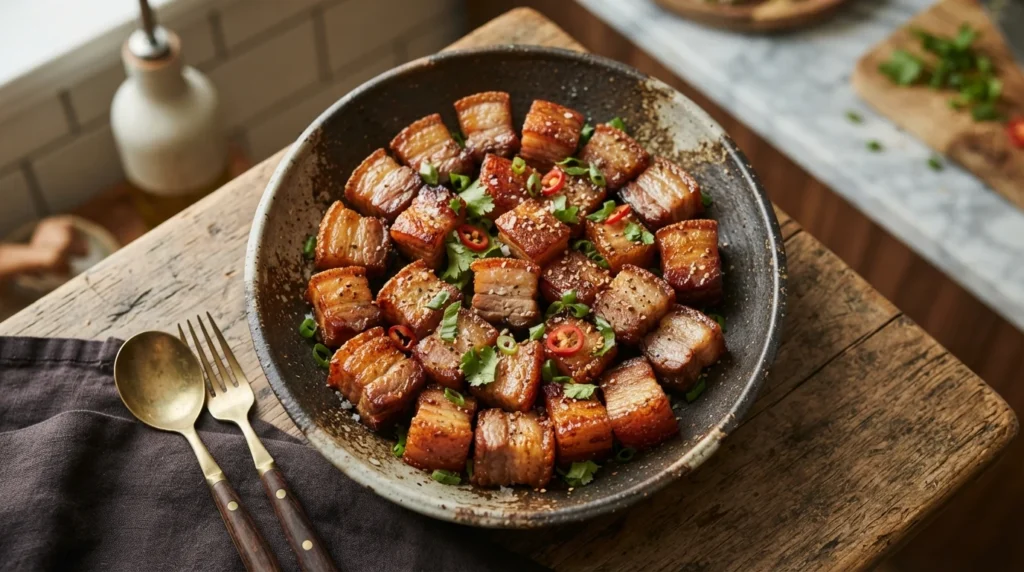
You will make a batch of savory pork belly cubes that are juicy in the center with a distinct, crunchy perimeter. This method yields approximately 16–20 bite-sized pieces suitable for two servings. The total active preparation and cooking time is about 45 minutes.
Key Metrics
- Servings: 2 (approximate)
- Prep Time: 10 minutes
- Cook Time: 35 minutes
- Total Time: 45 minutes
Ingredients
The recipe relies on high-quality pork belly, which provides the necessary fat content for moisture. We will use a standard 1-inch thick slab cut into cubes.
- Pork Belly: 500g (approx. 1 lb), skin and fat layer intact
- Olive Oil or Avocado Oil: 2 tablespoons, for searing
- Salt: 1 teaspoon, coarse sea salt preferred
- Black Pepper: ½ teaspoon, freshly ground
- Garlic Powder: ¼ teaspoon (optional, for flavor depth)
- Cumin Seeds: 2 tablespoons, lightly toasted (optional, adds earthy notes)
Method
Success depends on rendering the fat slowly before searing to avoid burning while ensuring enough fat remains for moisture.
Step 1: Preparation and Trimming
Cut the pork belly into uniform cubes, approximately 1.5 cm (¾ inch) in size. Uniformity ensures even cooking. Pat the pieces dry with paper towels; surface moisture is the enemy of a crisp exterior.
Step 2: Low-Heat Rendering
Place the pork belly cubes in a heavy-bottomed skillet or Dutch oven over medium-low heat. Add the oil and cover the pan with a lid. Cook for about 15–20 minutes, shaking the pan occasionally. You are looking for the fat to melt away from the meat pieces without browning them yet. The goal is to separate the lean meat from the rendered fat while keeping the internal temperature below 60°C (140°F) to prevent drying out.
Step 3: Searing for Crisp Edges
Remove the lid and increase the heat to medium-high. Once the pan is hot, add the pork belly cubes in a single layer if possible. Sprinkle with salt, pepper, garlic powder (if using), and cumin seeds. Cook undisturbed for 2–3 minutes per side until a deep golden-brown crust forms on all surfaces. This high-heat step creates the Maillard reaction, responsible for the savory flavor and crisp texture.
Step 4: Gentle Finishing
Reduce the heat to low. Cover the pan and cook for another 5–7 minutes. The meat should be tender but not mushy. If you notice the pieces shrinking significantly, they may have lost too much moisture; if they hold their shape well, they are ready.
Troubleshooting Common Issues
Here is how to handle common problems encountered when cooking pork belly bites:
- Dry Crumb Texture: This usually happens if the heat is too high during rendering, causing the lean meat to dehydrate before the fat renders. Always start low and slow.
- Soggy Edges: If the pieces turn out soft instead of crisp, they were likely not dried thoroughly before cooking or cooked at a temperature that was too low to induce browning.
- Overcooked Meat: Pork belly can easily become stringy if overcooked. Stop cooking as soon as the internal temperature reaches 71°C (160°F) and let them rest for 5 minutes before serving.
Substitutions and Variations
Note: Substituting ingredients alters the fat content and texture significantly. Do not assume they are interchangeable without testing.
- Fat Source: Butter can be used instead of oil, but it has a lower smoke point. Use ghee or ensure butter does not burn during searing.
- Spices: While cumin works well, other warm spices like paprika, chili flakes, or smoked salt can mimic the smoky profile without adding carbohydrates.
Storage and Reheating
These bites are best eaten fresh due to the crisp exterior. If storing:
- Refrigeration: Cool completely, then store in an airtight container for up to 3 days.
- Freezing: Wrap individually in foil or plastic wrap and freeze for up to 2 months. Thaw in the fridge overnight.
- Reheating: To restore crispness, reheat in a hot skillet over medium heat for 3–4 minutes per side. Microwaving will make them soggy.
This method provides a practical approach to preparing pork belly without relying on processed ingredients or uncertain nutritional data. Always check the internal temperature of meat to ensure safety, as color alone is not a reliable indicator of doneness.