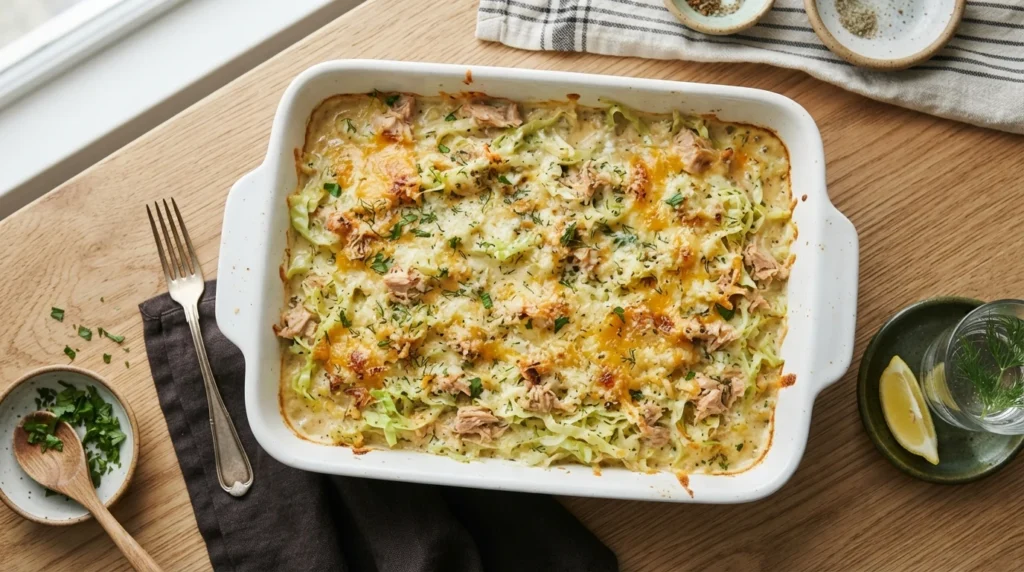

Traditional pasta dishes often rely on heavy cream and noodles to hold together, but for those following a ketogenic lifestyle, these elements can be problematic. You can achieve a satisfying, creamy texture with significantly fewer carbohydrates by using shredded cabbage ribbons instead of pasta. This Keto Tuna Cabbage Casserole is designed to keep the filling moist during reheating while providing a hearty protein boost from canned tuna.
Why Use Cabbage Ribbons Instead of Pasta?
Cabbage has a very low carbohydrate count and a high water content, which can sometimes lead to soggy casseroles. By using pre-shredded cabbage ribbons (often labeled as coleslaw mix), you gain texture and rapid cooking time. The key to success lies in managing the moisture; if the cabbage is too wet, it will make the sauce runny.
Recipe Overview
- Servings: 6
- Total Time: 45 minutes
- Preparation: 15 minutes
- Cooking: 20 minutes
Ingredients
- 1 can (6.5 oz) tuna in water or oil, drained well
- 1 lb (450 g) shredded cabbage ribbons (coleslaw mix), rinsed and thoroughly dried
- 2 large eggs
- 1 cup heavy cream or full-fat coconut milk
- 1/2 cup grated cheddar cheese, divided
- 1/4 cup mayonnaise
- 1 tsp Dijon mustard
- 1/2 tsp garlic powder
- 1/4 tsp onion powder
- Salt and black pepper to taste
- Optional: 1/4 cup frozen peas or green beans, cooked
Method
- Preheat Oven: Set your oven to 375°F (190°C). Grease a standard 9×13 inch baking dish or similar capacity pan.
- Prepare the Cabbage: If using fresh cabbage, shred it and rinse thoroughly. Drain in a clean kitchen towel or paper towels until completely dry. Excess water is the enemy of a creamy casserole.
- Mix the Base: In a large bowl, combine the drained tuna, eggs, heavy cream, mayonnaise, Dijon mustard, garlic powder, onion powder, salt, and pepper. Stir until smooth.
- Incorporate Vegetables: Fold in the dried cabbage ribbons. If using peas or green beans, add them now. The mixture should look cohesive but not soupy.
- Transfer to Pan: Pour the mixture into the prepared baking dish and spread evenly.
- Add Cheese: Sprinkle the grated cheddar cheese over the top. This helps bind the cabbage and adds flavor without making it watery.
- Bake: Cover loosely with foil to prevent excessive browning, then bake for 20 minutes. Remove the foil for the last 5 minutes if you prefer a golden crust.
- Rest Before Serving: Let the casserole stand for 10 minutes after removing it from the oven. This allows the sauce to set and prevents splattering when cutting.
Troubleshooting Common Issues
Soggy Filling: The most common failure point is a watery texture. This usually happens if the cabbage isn’t dried enough before mixing. Ensure every strand of cabbage is as dry as possible before folding it into the sauce.
Leaking Sauce: If you see liquid pooling at the bottom after baking, the cabbage may have released too much water during cooking. To prevent this next time, increase the drying time or reduce the amount of liquid cream used slightly.
Substitution Tips
For a different texture: You can swap half the cabbage for zucchini noodles (zoodles) to add crunch, but note that zucchini releases more water than cabbage. Drain zoodles thoroughly before adding.
For flavor depth: Add a dash of smoked paprika or fresh chives at the end for extra aroma without affecting the carbohydrate count significantly.
Storage and Reheating
This dish tastes best on day one, but it keeps well in the refrigerator for up to 4 days. To reheat, cover the casserole with foil and warm it in a 350°F (175°C) oven for 15–20 minutes. If reheating in the microwave, do so in short intervals (1–2 minutes), stirring halfway through to ensure even heating and prevent cold spots.
Final Thoughts
This Keto Tuna Cabbage Casserole offers a familiar comfort-food feel with a lighter footprint. By focusing on drying the cabbage thoroughly and balancing the cream-to-cabbage ratio, you can avoid the sogginess that often plagues low-carb pasta alternatives. It is a practical solution for meal prepping or satisfying cravings without compromising your dietary goals.