
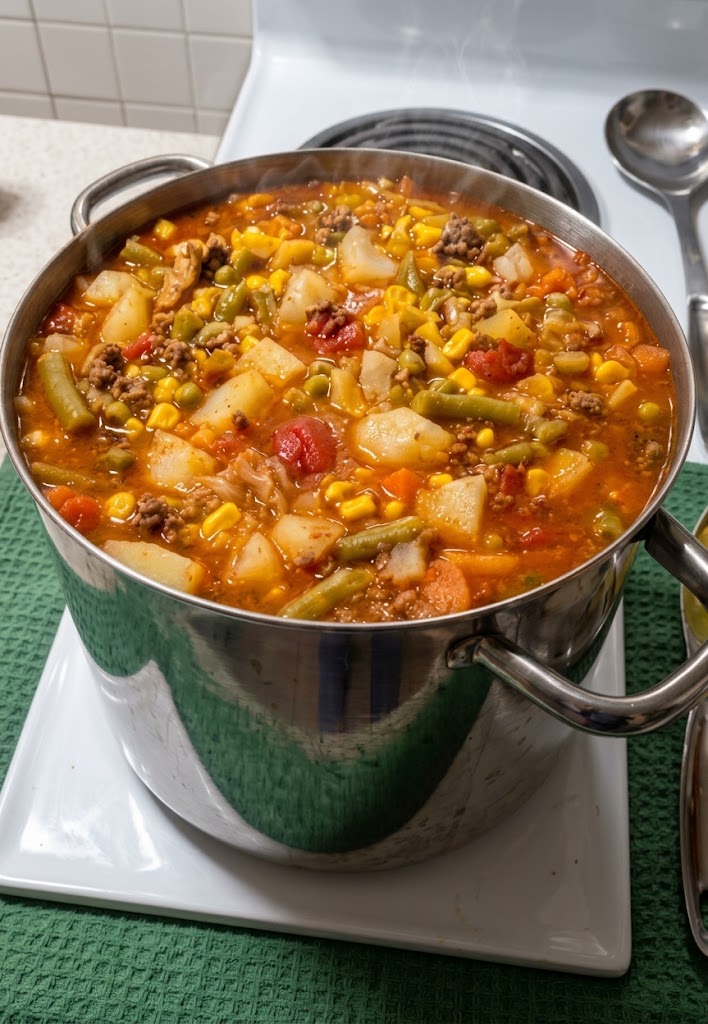

There’s something incredibly comforting about a big bowl of homemade Vegetable Beef Soup simmering on the stove. Tender pieces of beef, colorful vegetables, savory broth, and fragrant herbs come together in a hearty soup that feels both nourishing and satisfying. Every spoonful is packed with rich beef flavor and a delicious variety of textures, making this an easy family meal for chilly evenings, busy weeknights, or cozy weekends.
Unlike many heavy comfort foods, vegetable beef soup gets much of its heartiness from lean beef and plenty of vegetables. The result is a flavorful, protein-rich meal that can be enjoyed on its own or paired with a simple side salad or slice of crusty bread.
Why You’ll Love This Recipe
- Hearty and satisfying: Tender beef and plenty of vegetables make every bowl filling and comforting.
- Highprotein-friendly: Beef provides a substantial source of protein while the vegetables add flavor and texture.
- One-pot convenience: Everything comes together in one large pot for easier cooking and cleanup.
- Full of vegetables: Carrots, celery, tomatoes, potatoes, and green beans create a colorful and flavorful combination.
- Perfect for leftovers: The flavors become even richer after resting overnight, making it excellent for meal prep.
Ingredients
For the Beef
- 1½ pounds beef stew meat, cut into bite-sized pieces
- 1 tablespoon olive oil
- 1 teaspoon salt
- ½ teaspoon black pepper
- 1 teaspoon paprika
For the Soup
- 1 medium yellow onion, diced
- 3 cloves garlic, minced
- 3 medium carrots, sliced
- 3 celery stalks, sliced
- 2 medium potatoes, peeled and diced
- 1 cup green beans, cut into bite-sized pieces
- 1 can (14.5 ounces) diced tomatoes
- 6 cups beef broth
- 2 tablespoons tomato paste
- 1 teaspoon dried thyme
- 1 teaspoon dried oregano
- 1 bay leaf
- 1 teaspoon Worcestershire sauce
- ½ teaspoon smoked paprika
- Salt and black pepper, to taste
Optional Garnish
- Fresh parsley, chopped
- Freshly cracked black pepper
- A little grated Parmesan cheese
How to Make Vegetable Beef Soup
1. Season the Beef
Pat the beef pieces dry with paper towels. Season them with salt, black pepper, and paprika.
Dry beef browns much better than wet beef, so don’t skip this simple step.
2. Brown the Beef
Heat olive oil in a large heavy-bottomed pot or Dutch oven over medium-high heat.
Add the beef in batches, making sure not to overcrowd the pot. Sear for a few minutes on each side until the pieces develop a deep golden-brown exterior.
Transfer the browned beef to a plate.
The beef doesn’t need to be fully cooked at this stage. The goal is to build a flavorful browned crust.
3. Sauté the Aromatics
Reduce the heat to medium and add the diced onion and celery to the same pot.
Cook for about 4–5 minutes until the onion begins to soften.
Add the minced garlic and cook for another 30–60 seconds.
4. Add the Tomato Paste
Stir in the tomato paste and smoked paprika.
Cook for about 1 minute, stirring frequently. This helps develop the tomato paste’s savory flavor and gives the broth a deeper color.
5. Build the Soup
Return the browned beef to the pot.
Add the diced tomatoes, beef broth, carrots, potatoes, green beans, thyme, oregano, bay leaf, and Worcestershire sauce.
Stir everything together.
6. Simmer
Bring the soup to a gentle boil, then reduce the heat to low.
Cover partially and simmer for approximately 60–90 minutes, or until the beef becomes tender.
Stir occasionally and check the liquid level during cooking. Add a little extra broth if needed.
7. Adjust the Seasoning
Once the beef and vegetables are tender, remove the bay leaf.
Taste the soup and adjust the salt, pepper, herbs, or Worcestershire sauce as needed.
If you prefer a thicker soup, simmer uncovered for another 10–15 minutes.
8. Serve
Ladle the hot soup into bowls and garnish with fresh parsley and freshly cracked black pepper.
Serve immediately while the broth is hot and the beef is tender.
Can This Vegetable Beef Soup Support Weight Loss Goals?
Vegetable Beef Soup can work well in a balanced, calorie-conscious eating pattern because it combines protein-rich beef with a generous amount of vegetables and a flavorful broth. The soup can be quite filling without requiring a large amount of added fat.
For a lighter version, choose lean beef, use a moderate amount of oil, increase the non-starchy vegetables, and control the portion of potatoes. Serving the soup without calorie-dense sides can also keep the overall meal more moderate.
No single recipe guarantees weight loss, but a balanced soup like this can be a practical option when it fits your overall eating pattern and portion needs.
Does Vegetable Beef Soup Fit a highprotein Lifestyle?
Yes, Vegetable Beef Soup is naturally highprotein-friendly because beef is the main protein source and each serving can provide a substantial amount of protein. The vegetables contribute fiber and nutrients while keeping the soup hearty and colorful. Traditional potatoes and carrots add carbohydrates, so the soup is not strictly low-carb. For fewer net carbs, reduce the potatoes and increase vegetables such as zucchini, mushrooms, spinach, cauliflower, or green beans.
Why This Recipe Is Special
- Deep beef flavor: Browning the meat first gives the broth a much richer taste.
- Vegetable-packed: Multiple vegetables create layers of flavor, color, and texture.
- Comforting but practical: It’s hearty enough to be a complete meal without complicated preparation.
- Meal-prep friendly: A large pot makes several satisfying portions.
- Easy to customize: You can adjust the vegetables, herbs, and carbohydrate content to suit your preferences.
My Personal Experience
- Browning the beef is worth it: Taking a few extra minutes to sear the beef creates a noticeably deeper and more savory broth.
- The vegetables become wonderfully tender: Slow simmering allows the carrots, celery, potatoes, and green beans to absorb the beefy broth.
- Tomato paste adds depth: Just a small amount makes the soup taste richer without making it overwhelmingly tomato-based.
- It tastes even better the next day: Resting allows the herbs, beef, and vegetables to blend together beautifully.
- The broth is the best part: A slow simmer creates a savory base that makes simple vegetables taste incredibly satisfying.
Perfect For
Vegetable Beef Soup is perfect for family dinners, cold-weather lunches, Sunday meal prep, busy weeknights, cozy weekends, freezer meals, and casual gatherings. It is also a great recipe to make when you want a large pot of food that can be enjoyed for several meals throughout the week.
Common Mistakes to Avoid
1. Skipping the Beef Browning
Adding raw beef directly to the broth can still produce soup, but you miss the deep caramelized flavor created by properly searing the meat.
2. Overcrowding the Pot
If too much beef is added at once, it can release moisture and steam instead of browning. Work in batches when necessary.
3. Cutting Vegetables Unevenly
Very large potato chunks and tiny carrot pieces won’t cook at the same rate. Try to cut the vegetables into reasonably uniform pieces.
4. Boiling the Soup Aggressively
A hard boil can make the broth cloudy and may cause the beef to become tougher. Keep the soup at a gentle simmer.
5. Adding Too Much Salt Early
Beef broth and Worcestershire sauce can already contain significant sodium. Season gradually and adjust near the end.
Required Equipment
- Large Dutch oven or soup pot: Provides enough space for the beef, vegetables, and broth.
- Wooden spoon: Useful for scraping flavorful browned bits from the bottom.
- Sharp chef’s knife: Makes chopping beef and vegetables faster and more consistent.
- Cutting board: Gives you a stable surface for preparing ingredients.
- Ladle: Makes serving the hot soup easy and mess-free.
- Airtight storage containers: Ideal for storing individual portions for meal prep.
High-Protein Tips
Want to make this soup even more suitable for a highprotein lifestyle?
- Choose lean beef stew meat.
- Increase the amount of beef while slightly reducing the potatoes.
- Add extra lean beef if you’re preparing the soup as a post-workout or substantial meal.
- Include additional protein-rich ingredients that fit your preferred version.
- Serve with a Greek-yogurt-based side or another protein-rich accompaniment.
- Increase vegetables rather than relying on additional starch for volume.
How to Make It Lower Carb
The traditional recipe contains potatoes, carrots, and tomatoes, so it isn’t a very low-carb soup.
For a lower-carb version:
- Replace potatoes with cauliflower.
- Add zucchini or mushrooms.
- Increase green beans and celery.
- Add chopped spinach near the end.
- Use fewer carrots.
- Choose a broth without added sugar.
- Skip bread or crackers as a side.
Because carbohydrate content depends on the exact ingredients and portions, calculate the net carbs from the products you use if you’re closely tracking carbohydrates.
Vegetable Variations
One of the best things about homemade vegetable beef soup is how easy it is to customize.
Try adding:
- Zucchini
- Mushrooms
- Corn
- Peas
- Spinach
- Cabbage
- Bell peppers
- Cauliflower
- Diced turnips
For softer vegetables such as spinach or zucchini, add them closer to the end of cooking so they don’t become overly soft.
Flavor Variations
Italian-Style Vegetable Beef Soup
Add extra oregano, basil, Italian seasoning, and Parmesan for an Italian-inspired version.
Spicy Beef Vegetable Soup
Add crushed red pepper flakes, cayenne, or diced jalapeños for a gentle kick.
Garlic Herb Version
Increase the garlic and add fresh rosemary and parsley toward the end.
Mushroom Beef Soup
Add plenty of sliced mushrooms for a richer, earthier flavor.
Low-Carb Beef Soup
Replace the potatoes with cauliflower and zucchini while increasing the beef and non-starchy vegetables.
Make-Ahead Tips
Vegetable Beef Soup is excellent for making ahead.
Prepare the entire soup according to the recipe, allow it to cool slightly, and refrigerate it in airtight containers.
The flavor often improves after a night in the refrigerator because the beef, vegetables, herbs, and broth have more time to blend together.
If you are intentionally making the soup for several days of meals, slightly undercook the vegetables so they retain better texture when reheated.
Storage
Allow leftover soup to cool before transferring it to airtight containers.
Store in the refrigerator for up to 3–4 days.
For longer storage, freeze individual portions for up to approximately 3 months for best quality.
Thaw frozen soup in the refrigerator overnight when possible, then reheat gently on the stovetop until steaming hot.
Frequently Asked Questions
What cut of beef is best for vegetable beef soup?
Beef chuck or traditional stew meat works particularly well because it becomes tender during slow cooking. Leaner cuts can also be used, but they may require more careful cooking to avoid becoming dry.
Can I use ground beef instead?
Absolutely. Brown ground beef thoroughly, drain excess fat if necessary, and continue with the vegetables and broth. The texture will be different, but the soup will still be delicious.
Can I make this soup in a slow cooker?
Yes. Brown the beef first for the best flavor, then transfer everything to a slow cooker and cook until the beef is tender and the vegetables are cooked through.
Can I make Vegetable Beef Soup without potatoes?
Yes. Simply replace the potatoes with cauliflower, zucchini, mushrooms, cabbage, or additional green beans.
Why is my beef still tough?
Beef stew meat often becomes tender through time rather than high heat. Keep the soup at a gentle simmer and allow enough cooking time for the connective tissue to soften.
Can I freeze Vegetable Beef Soup?
Yes. It freezes very well. Keep in mind that potatoes can become slightly softer after freezing and thawing.
Is Vegetable Beef Soup naturally high in protein?
Yes. Because beef is the primary ingredient, the soup is naturally highprotein-friendly. The exact protein amount depends on the cut of beef and how much beef is included in each serving.
Approximate Nutrition
Per serving, assuming the recipe makes approximately 6 servings:
- Calories: 380–450
- Protein: 30–36g
- Fat: 18–24g
- Carbohydrates: 25–32g
- Fiber: 5–7g
- Net carbs: approximately 20–27g
These are approximate estimates and can vary based on the beef cut, broth, vegetable quantities, potatoes, oil, and serving size.
Final Thoughts
This Vegetable Beef Soup is the kind of recipe that earns a regular place in your dinner rotation. Tender beef, colorful vegetables, rich broth, and fragrant herbs create a satisfying meal that feels homemade in the best possible way.
It’s hearty without being complicated, naturally highprotein-friendly, and easy to adapt when you want a lower-carb version. Make a big pot, enjoy a bowl while it’s hot, and save the rest for easy lunches and dinners throughout the week.