
Why Your Chia Pudding Gets Grainy
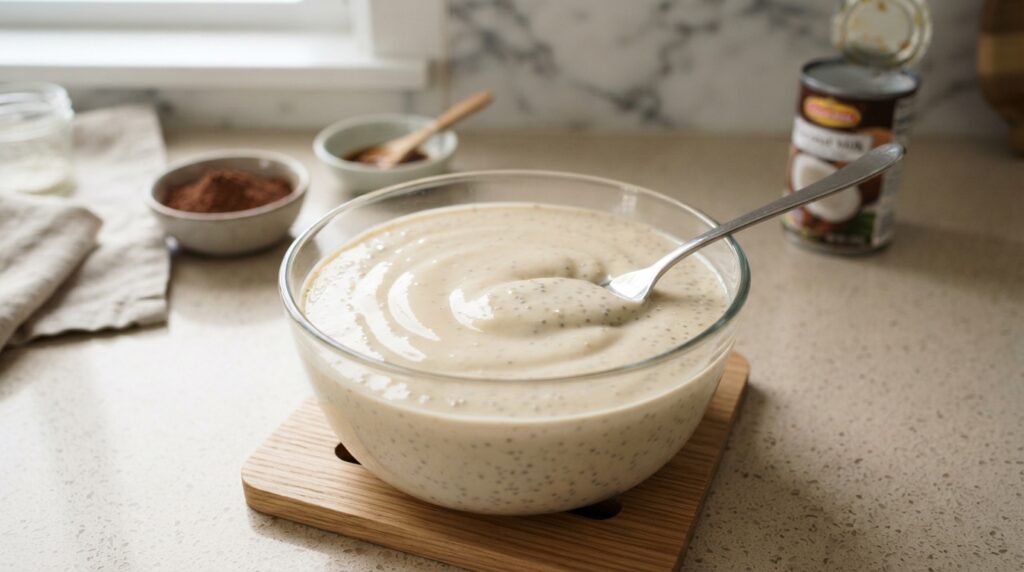
Making chia pudding is surprisingly easy, but the texture can quickly turn into a gritty mess if not handled correctly. This happens because chia seeds absorb water rapidly to form a gel. If you add too much liquid at once or let the mixture sit without stirring, the seeds clump together and trap air, creating a grainy texture rather than a smooth porridge.
The goal is a cohesive, pudding-like consistency that holds its shape yet feels soft on the tongue. Achieving this requires patience in mixing and an understanding of how the seeds interact with coconut milk over time.
Ingredients
This recipe yields approximately four servings. It uses standard ingredients accessible in US and UK kitchens.
- Chia seeds: 60 grams (about 3 tablespoons)
- Coconut milk (full-fat, canned): 450 milliliters (1 can), chilled if possible
- Cocoa powder (unsweetened): 20 grams (optional; omit for plain version)
- Erythritol or Monk fruit sweetener: 40 grams (approx. 3 tablespoons, dissolved in small warm water first if using granular form)
- Vanilla extract: 5 milliliters
- Pinch of sea salt: for flavor balance
Preparation Method
Total time is approximately 10 minutes plus overnight chilling for best texture.
- Dissolve the sweetener. If using granular erythritol or monk fruit blend, dissolve it in a small amount of warm water (about 15 milliliters) to prevent clumping. Set aside.
- Mix dry and wet ingredients. In a medium bowl, combine the chia seeds, cocoa powder (if using), and sea salt. Pour in the cold coconut milk and the dissolved sweetener mixture.
- Thoroughly stir. Use a whisk or fork to beat the mixture vigorously for at least two minutes. This is the critical step. You are breaking up the seeds so they disperse evenly throughout the liquid before the gel begins to set.
- Let it rest. Cover the bowl and refrigerate for at least four hours, preferably overnight. The chia will absorb the coconut milk and thicken into a pudding.
- Final texture check. Before serving, give it one more quick stir to ensure no small clumps have formed during the resting period.
Troubleshooting Common Issues
Problem: The pudding is still runny after 8 hours.
Cause: Chia seeds vary in size and absorption rate. Old seeds may absorb slower.
Fix: Add another tablespoon of chia seeds gradually over the next hour, stirring well between additions. If you add too much at once, it will re-clump.
Problem: Large clumps remain visible.
Cause: Insufficient initial mixing or adding liquid too fast.
Fix: Do not panic. The seeds have already started gelling. To fix the texture, blend the pudding in a blender for 30 seconds on high. This breaks down the gel structure and distributes any remaining clumps, resulting in a smoother mouthfeel.
Problem: It feels too thick and rubbery.
Cause: Too many seeds or extended resting time.
Fix: Stir in an additional 50 milliliters of coconut milk to loosen the consistency. You can also mix in a spoonful of Greek yogurt or whipped cream to add moisture and tang.
Suitable Substitutions
Creamy Coconut Milk vs. Light Coconut Milk:
Full-fat canned coconut milk is essential for this recipe. Using light coconut milk will result in a thinner, less stable pudding that lacks the richness needed to mimic traditional chia pudding texture.
Almond Flour or Coconut Flour:
Do not substitute these flours for chia seeds. Chia seeds are the primary gelling agent; removing them and adding flour would create a completely different dish resembling a cake batter rather than a pudding.
Storage and Reheating
This pudding can be stored in an airtight container in the refrigerator for up to five days. As it sits, it will continue to thicken slightly. If it becomes too firm, stir in a splash of coconut milk before serving.
To reheat gently (optional), microwave the pudding in 30-second intervals, stirring between each, until warmed through. Avoid boiling, as high heat can alter the texture and potentially deactivate some beneficial compounds in the seeds.
Why This Works
The technique relies on two principles: hydration kinetics and mechanical dispersion. By dissolving sweeteners first, you prevent sugar crystals from sticking to the seeds. By whisking vigorously before the gel sets, you ensure every seed is suspended individually in the coconut milk. The resting period allows the starches in the chia to swell fully without aggregating.
This approach eliminates the need for thickeners or stabilizers, keeping the dish naturally low-carbohydrate and keto-friendly while ensuring a delightful, cloud-like texture.