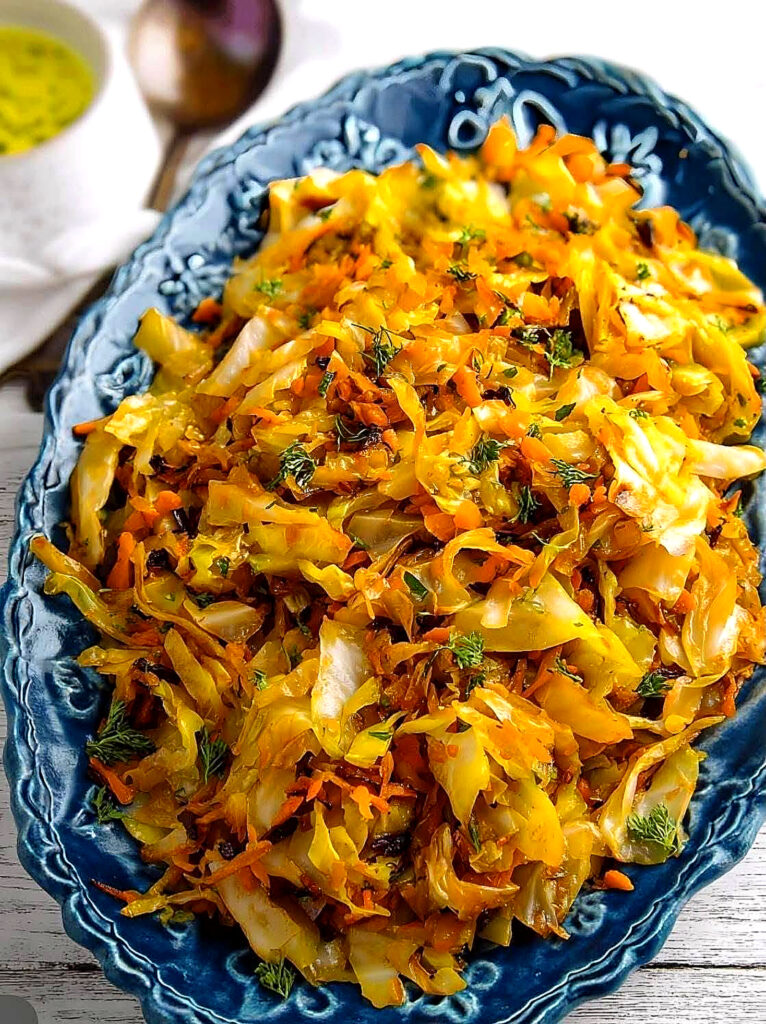

Light, fragrant, and wonderfully flavorful, this vegan cabbage poriyal is a simple South Indian side dish made with tender cabbage, coconut, curry leaves, and aromatic spices. It comes together quickly in one pan and makes an easy addition to rice, dal, dosa, or a comforting Indian-style meal.
Can This Recipe Support Weight Loss Goals?
This cabbage poriyal can fit nicely into a balanced eating pattern because cabbage is naturally light and provides fiber. Using a moderate amount of coconut and oil keeps the dish flavorful without making it unnecessarily heavy.
Does This Recipe Fit a High-Protein Lifestyle?
Cabbage poriyal is not naturally high in protein, but it can easily be paired with protein-rich vegan foods. Serve it alongside dal, chickpeas, lentils, tofu, or a bean curry to create a more protein-balanced meal.
Why This Recipe is Special
- 100% vegan — Naturally free from dairy and eggs.
- Quick and simple — Ready in about 25 minutes.
- South Indian-inspired — Curry leaves, mustard seeds, and coconut create authentic flavor.
- Light yet satisfying — Tender cabbage combines beautifully with aromatic spices.
- Naturally gluten-free — A simple side dish for a variety of meals.
My Personal Experience
- The coconut makes the cabbage shine.
A little freshly grated coconut adds subtle sweetness and a delicious texture. - The tempering is what brings everything together.
Mustard seeds, cumin, curry leaves, and chilies create an incredible aroma as soon as they hit the hot oil. - It’s one of the easiest vegetable sides.
Everything cooks in one pan with very little preparation. - It pairs with almost anything.
Serve it with rice and dal for a classic combination or alongside rotis for a simple meal.
Perfect For
This cabbage poriyal is perfect for weeknight dinners, Indian lunchboxes, family meals, meal prep, South Indian-inspired meals, rice dishes, festive thalis, and light lunches.
Why You’ll Love This Recipe
- Fast to prepare
The cabbage cooks quickly, making this ideal for busy days. - Full of aromatic flavor
Curry leaves, mustard seeds, ginger, and coconut make simple cabbage incredibly flavorful. - Minimal ingredients
You only need a handful of everyday ingredients. - Great meal-prep side
It stores well and reheats quickly.
Common Mistakes to Avoid
- Overcooking the cabbage — Cook until tender but still slightly crisp for the best texture.
- Using too much water — Cabbage releases moisture as it cooks, so excess water can make it mushy.
- Burning the spices — Keep the tempering over medium heat and add the curry leaves carefully.
- Adding coconut too early — Add it near the end to preserve its fresh flavor.
Required Equipment
- Large skillet or kadai — Provides enough room for the cabbage to cook evenly.
- Sharp knife — Makes slicing the cabbage quick and uniform.
- Wooden spoon — Makes stirring easy without damaging the vegetables.
- Small bowl — Keeps the tempering ingredients ready before cooking.
Storage Instructions
Allow the poriyal to cool before transferring it to an airtight container.
Refrigerate for up to 3–4 days.
Reheat gently in a skillet over medium-low heat for 3–5 minutes or microwave until heated through.
For the freshest flavor and texture, add a small sprinkle of fresh coconut after reheating.
Recipe Details
Preparation Time: 10 minutes
Cooking Time: 15 minutes
Total Time: 25 minutes
Servings: 4
Best Season: All-season
Total Calories (Per Serving): Approximately 125 calories
Short Introduction
This vegan cabbage poriyal is a quick and flavorful South Indian-style vegetable dish.
Tender cabbage is tossed with aromatic spices, curry leaves, and coconut.
Serve it with rice, dal, dosa, or roti for a simple and delicious meal.
📝 Ingredients
- 4 cups finely shredded green cabbage
- ½ cup grated fresh or unsweetened dried coconut
- 1 tablespoon coconut oil or vegetable oil
- 1 teaspoon mustard seeds
- ½ teaspoon cumin seeds
- 1 dried red chili, broken into pieces
- 8–10 curry leaves
- 1 small green chili, finely chopped
- 1 teaspoon grated fresh ginger
- ¼ teaspoon turmeric powder
- ½ teaspoon salt, or to taste
- 2 tablespoons water, only if needed
- 1 tablespoon fresh cilantro, chopped
- 1 teaspoon lemon juice, optional
Note: If using dried coconut, choose unsweetened coconut. Fresh coconut provides the best traditional flavor.
Directions
- Prepare the cabbage.
Remove any tough outer leaves, wash the cabbage, and finely shred it. - Heat the oil.
Place a large skillet or kadai over medium heat and add the oil. - Temper the mustard seeds.
Add mustard seeds and cook for 30–45 seconds until they begin to pop. - Add cumin and chili.
Add cumin seeds and dried red chili. Cook for 20–30 seconds until fragrant. - Add curry leaves.
Carefully add the curry leaves and chopped green chili. Cook for another 20–30 seconds. - Add ginger.
Stir in grated ginger and sauté for 30 seconds until fragrant. - Add turmeric.
Sprinkle in turmeric and stir quickly so it doesn’t burn. - Add the cabbage.
Add the shredded cabbage and salt. Toss thoroughly to coat it with the spices. - Cook the cabbage.
Cook uncovered over medium heat for 7–10 minutes, stirring every few minutes. - Check the texture.
The cabbage should become tender while retaining a slight bite. If it begins sticking, add 1–2 tablespoons of water. - Add coconut.
Reduce the heat to low and stir in the grated coconut. - Finish cooking.
Cook for another 2–3 minutes, stirring gently. Avoid overcooking the coconut. - Add freshness.
Turn off the heat and add chopped cilantro and optional lemon juice. - Serve.
Serve warm as a side dish with rice, dal, dosa, idli, or roti.
Vegan Cooking Tips
- Use fresh coconut for the most authentic flavor.
- Keep the cabbage slightly crisp instead of cooking it until mushy.
- Don’t cover the pan unless necessary because cabbage releases its own moisture.
- For extra protein, serve with dal, chickpeas, lentils, or tofu.
- Add roasted peanuts or cashews for extra crunch and protein.
Nutrition Facts
Per Serving — Approximate
- Calories: ~125
- Fat: ~8 g
- Cholesterol: 0 mg
- Sodium: ~310 mg
- Potassium: ~270 mg
- Total Carbohydrates: ~11 g
- Fiber: ~4 g
- Net Carbs: ~7 g
- Sugars: ~4 g
- Protein: ~3 g
- Calcium: ~55 mg
Nutrition values are approximate and depend on the amount of coconut and oil used.
Notes
- Spicy version: Add extra green chili or dried red chili.
- Protein boost: Add roasted peanuts, cashews, chickpeas, or serve with dal.
- Flavor boost: Add a pinch of asafoetida to the tempering.
- Coconut: Adjust the amount according to your preference.
- Storage: Refrigerate for up to 3–4 days.
- Reheating: Warm gently in a skillet to preserve the texture.
- Gluten-free: Naturally gluten-free when using certified gluten-free spices.
- Allergy: Contains coconut; add nuts only if desired.
- Vegan: Naturally vegan when prepared with plant-based oil.
Frequently Asked Questions
1. Can I use red cabbage instead of green cabbage?
Yes, although the color and slightly stronger flavor will be different.
2. Can I make cabbage poriyal without coconut?
Yes, simply omit the coconut or replace it with roasted peanuts for texture.
3. Why is my cabbage watery?
Cabbage naturally releases water, so cook it uncovered over medium heat and avoid adding unnecessary liquid.
4. Can I add other vegetables?
Yes, carrots, green beans, peas, and grated coconut pair particularly well with cabbage.
5. What should I serve with cabbage poriyal?
It pairs beautifully with steamed rice and dal, sambar, rasam, dosa, idli, or roti.
6. Can I prepare it ahead of time?
Yes, prepare it up to 3–4 days ahead and reheat gently before serving.